

Full-Service Storage vs. Self-Storage vs. Portable Containers: Which NYC Option Fits You?
Before you compare storage prices, answer four quick questions. Do you have a car? A free weekend to haul boxes? Any off-street space: a driveway, a yard? And will you need to reach your things often, or just tuck them away for a while?
Your answers matter more than any sticker price, because the three ways to store things in NYC aren't really the same product. And almost every "storage options compared" page is written by a company that sells exactly one of them, so it quietly tilts the table its own way.
We sell one of them too: full-service. So here's the honest deal: we'll set all three side by side, name what each is worst for, and tell you plainly when we're not your pick. We've got full-service storage explained on its own page; this one is the straight side-by-side.
Full-service, self-storage, or a container: the short version
There's no single best way to store your things in NYC, just the one that fits your situation. The three options split by who does the work and how you reach your stuff:
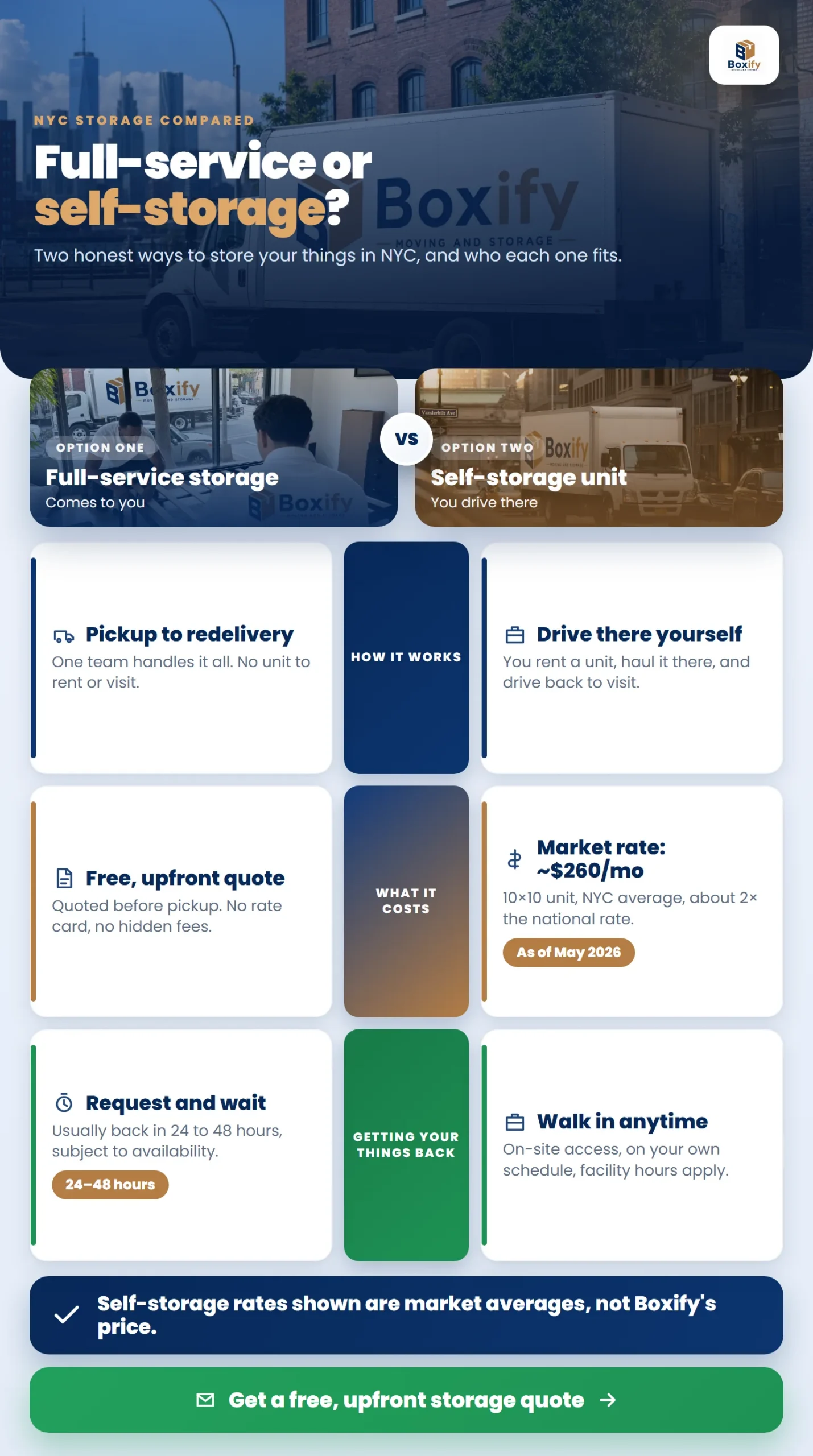
- Full-service (valet) comes to you: Boxify picks up, stores, and redelivers, with no unit to rent or visit. Best if you have no car, no time, and no space to haul.
- Self-storage is a unit you rent and drive to. Best if you want on-site access on your own schedule and don't mind the hauling.
- A portable container is dropped for you to load. Best if you have off-street space and a longer timeline. Rare in NYC.
The rule: in a small NYC apartment with no car, full-service usually fits best. If you need to reach your things often, on your own schedule, self-storage may suit you more. Have a driveway and time to load? A container can work.
Key takeaways
- The split is who does the hauling. Full-service comes to you, self-storage is a unit you drive to, and a container is dropped for you to load.
- Full-service fits the carless apartment. Boxify picks up, stores and redelivers, so there is no unit to rent or visit and no van to borrow.
- Self-storage fits frequent access. If you need to reach your things on your own schedule, a unit you hold the key to is the honest answer.
- A container needs space NYC rarely has. It has to be dropped somewhere and loaded by you, which is why it is rare here.
- A unit's rate is not its cost. NYC self-storage ran about $260 a month for a 10x10 as of May 2026, before you add the truck and your own time.
- Watch what a low rate hides. In 2026 New York City's consumer regulator sued a major national self-storage operator over bait-and-switch pricing and undisclosed fees.
- With us the number is the number. A free, upfront quote, no hidden fees, climate-controlled space and no minimum term.
The three NYC storage options, side by side
Full-service, self-storage, and portable containers differ on the four things that actually decide your choice: who does the work, what it really costs, how you get to your things, and what each one is worst for.
Here's the quick view; the detail and sources follow below. Every dollar figure is attributed market context, not a Boxify price. Boxify quotes each job on its own.
| Full-service (valet) | Self-storage | Portable container | |
|---|---|---|---|
| How it works | It comes to you: pickup, storage, redelivery. No unit to rent or visit | You rent a unit, haul your things there, and drive back to visit | A container is dropped at your place; you load it, then it's kept on-site or towed to a yard |
| Roughly what it costs | Priced by plan; most don't publish a rate card | ~$260/mo for a 10×10, as of May 2026, about 2× the $119 national average | No published NYC price; quote-based |
| Who does the hauling | The crew: they pick up and bring it back | You (truck, load, drive, unload, each way) | You load it; the company hauls the container |
| Getting to your things | You request them back, usually within 24 to 48h, subject to availability; best booked ahead | On-site, on your own schedule, during access hours | While it's on your property, or by scheduling its redelivery |
| Not best for | Needing to visit your things often, on your own schedule | A small apartment with no car or time: the sticker hides the truck, your hours, and the round trips | A typical NYC block with no driveway or off-street space to put it |
The "Not best for" row is the one most comparison pages leave off. We put it up front, because it's the row that saves you from the wrong choice.
Full-service (valet) storage: it comes to you
Full-service (or valet) storage is the option where the labor, not the empty space, is what you're really paying for. Instead of renting a room and filling it yourself, you hand the carrying, the hauling, and the keeping to a crew, and stay put while they do it.
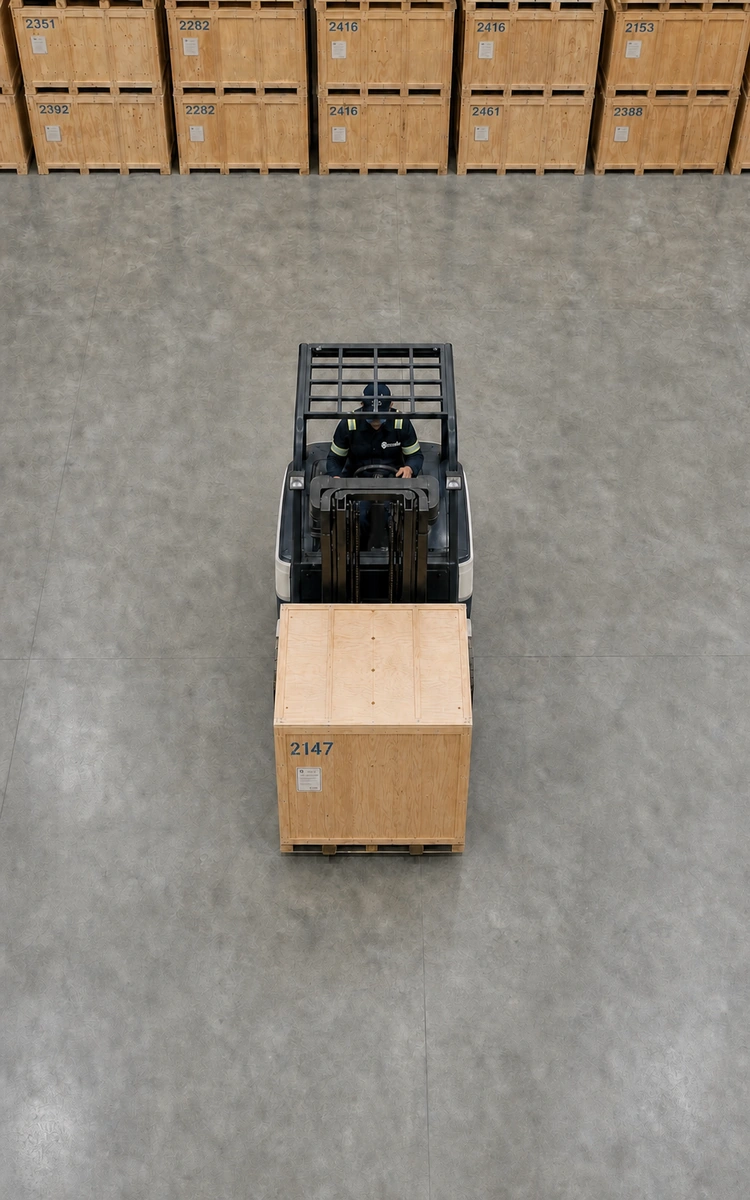
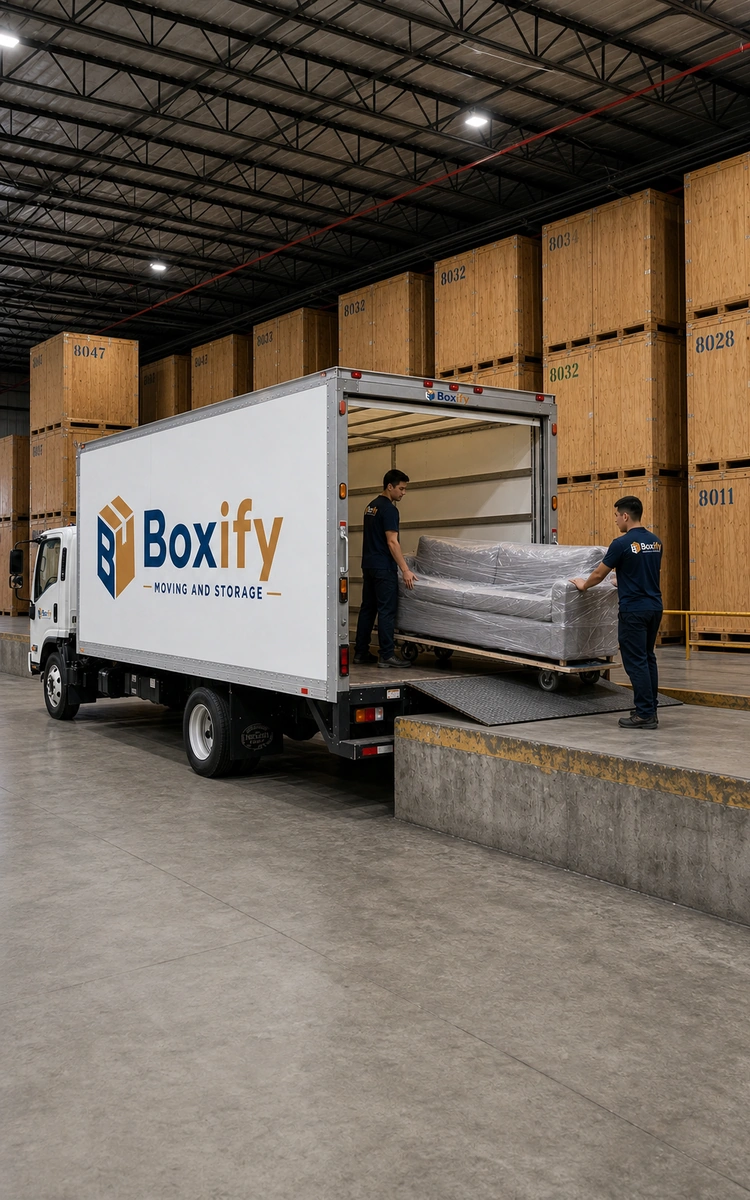
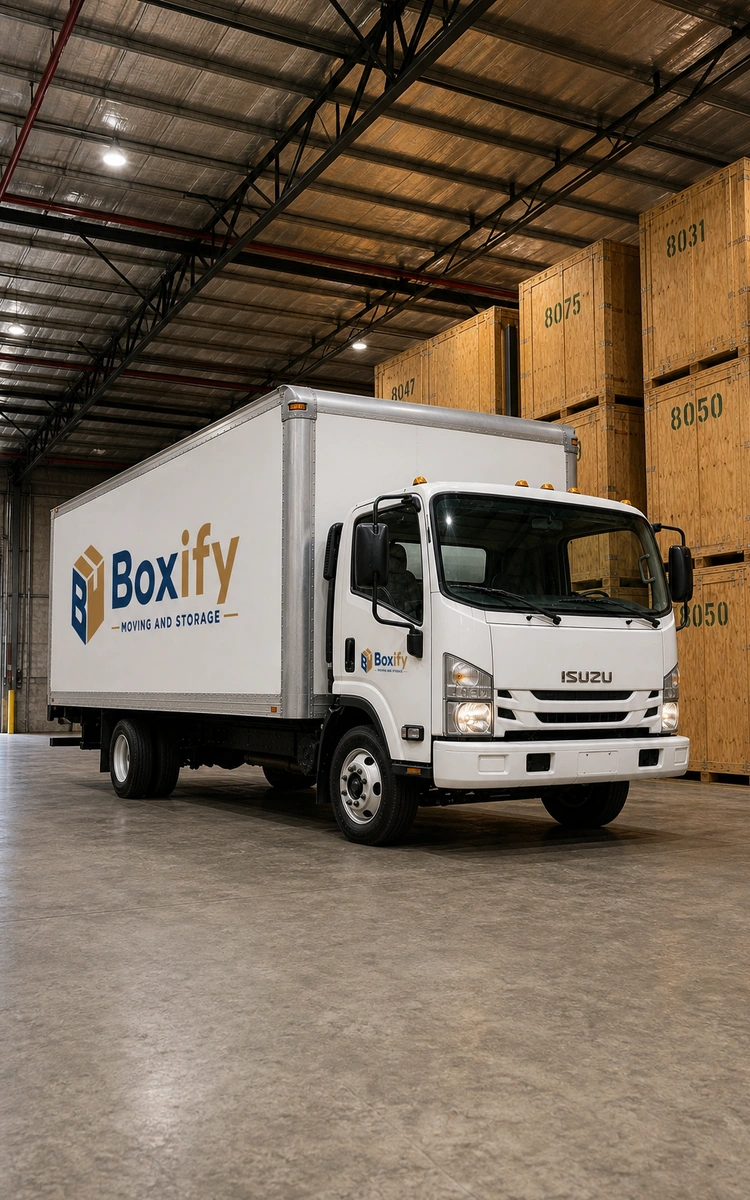
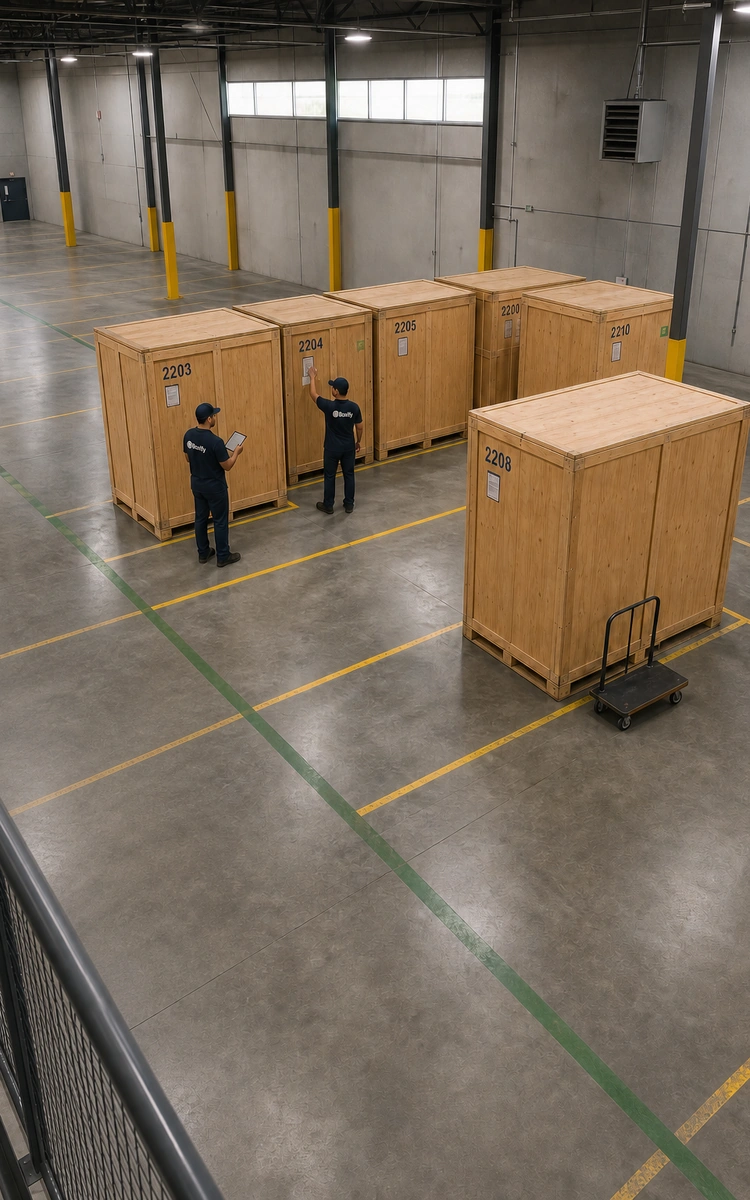
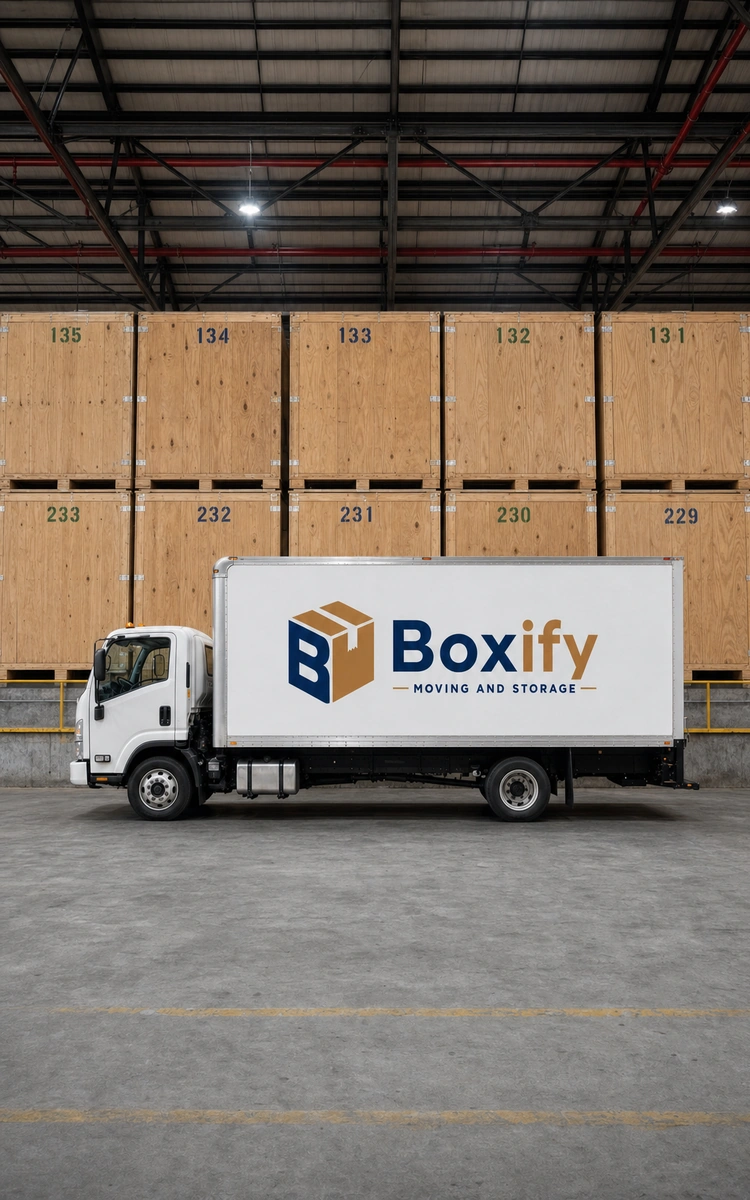
Here's how it actually works with Boxify, a Greater NYC mover based in Queens. You start with a free, upfront quote: no hidden fees, so the price you're quoted is the price you pay. The crew comes to your door, picks everything up, and stores it in a climate-controlled space, where temperature and humidity are kept in check.
There's no minimum term, so a few weeks is as fine as a year; you store for exactly as long as you need. When you want your things, you put in a request, and they're usually redelivered within 24 to 48 hours, subject to availability; it's best to book that in advance.
Who it fits. This is for you if you have no car, a small apartment, and no weekend to spend carrying boxes up four flights. The work (and the truck) is ours, not yours.
What it isn't good for. It's not your best pick if you need to visit your things often, on your own schedule. Redelivery is a request-and-wait, not a walk-in, so if you like to drop by and rummage whenever the mood strikes, self-storage will make you happier.
If full-service sounds like your situation, the easy first step is a free, upfront quote. No pressure, no obligation.
Self-storage: the unit you rent and drive to
Self-storage is the option most people picture: you rent a unit, haul your things there yourself, and drive back whenever you want to visit them.
This is what the generic searches ("storage units NYC," "self storage NYC") point to: a padlocked room you drive to. Its real advantage is access. The unit is yours, so you can come and go on your own schedule during the facility's hours.
The catch is the true cost. According to StorageCafe's May 2026 street-rate data, a 10×10 self-storage unit in NYC averages about $260 a month, roughly twice the $119 national average for the same unit. And the sticker is only part of it: you also pay for the truck, your own hours, and a round trip every time you need something.
There's a fine-print risk, too. In 2026, NYC's consumer regulator (the Department of Consumer and Worker Protection) sued a major national self-storage operator over bait-and-switch pricing and undisclosed fees; the company later settled for $1.7 million.
In its complaint, the DCWP put it plainly: the operator advertised low rates, then raised them "suddenly and steeply after move-in" despite written assurances of 30 days' advance notice. It's a reminder to read the terms, and for the full cost picture, see what full-service storage costs in NYC.
Who it fits. Self-storage is for you if you own a car, have time to haul, live near a facility, and want anytime, on-your-own-schedule access. If that's you, it may genuinely beat full-service, and we'll say so.
Portable containers (POD-style): dropped at your curb
A portable storage container is dropped at your place for you to load at your own pace, then kept on-site or towed to the company's yard.
Portable storage in NYC runs into one hard wall: somewhere to put the container. If you don't have a driveway, a yard, or a legal place to leave a container at the curb, there's often nowhere for it to sit. The model that shines in the suburbs (a container parked in your driveway for a week) is genuinely hard to pull off on a typical NYC block.
There's no published NYC price for it, either; it's quote-based.
Who it fits. A container can work if you have off-street space, a longer do-it-yourself timeline, or you're storing and moving at the same time. It's not your pick in a typical no-outdoor-space NYC apartment; there's simply nowhere to put it.
Which storage fits you? An honest decision rule
The best storage option is the one that fits your situation, so route yourself with the four questions from the top.
- No car, no time, small apartment? Full-service fits best. It comes to you, so you never touch a truck.
- Want to visit your things on your own schedule, and have a car and time to haul? Self-storage suits you more: the on-site access is the whole point.
- Have off-street space and a longer DIY timeline? A portable container can work; just confirm you have somewhere to legally place it first.
One pattern worth flagging, drawn from years of writing about how New Yorkers actually choose between these three: most people decide on the monthly sticker, then regret it on effort. The people happiest with self-storage almost always already have a car and a free Saturday. The ones who reach for it because the rate looks lowest (no car, no time) tend to end up paying a mover for a one-way haul anyway. Start from how you'll move your things and how often you'll want them, not the sticker, and the right option usually picks itself.
That middle branch is the honest one. If you're someone who wants to drop by a unit and rummage whenever you like, full-service isn't your best fit, and we'd rather tell you that now than sell you the wrong thing. No option here is always best; the right one is simply the one that matches how you live.
FAQ
What's the difference between full-service and self-storage?
Full-service (valet) storage comes to you: the company picks up your things, stores them, and delivers them back, with no unit to rent or visit. Self-storage is a unit you rent, haul your things to yourself, and drive back to whenever you want to visit them.
Is full-service storage cheaper than a self-storage unit in NYC?
It can be, once you count the whole cost. A self-storage sticker doesn't include the truck, your time, or the round trips, and NYC's 10×10 units average about $260 a month as of May 2026, roughly twice the national average. Full-service is priced by plan instead of by the square foot; for the full cost breakdown, see what full-service storage costs in NYC.
Do portable storage containers work in NYC?
Rarely, for most residents. A container needs somewhere to sit, and if you don't have a driveway, a yard, or a legal place to leave one at the curb, there's often nowhere to put it. If you do have off-street space and a longer DIY timeline, a container can work; in a typical apartment, it's the missing outdoor space that rules it out.
How do I get my things back from full-service storage?
You put in a request, and your things are usually redelivered within 24 to 48 hours, subject to availability; it's best to book the redelivery in advance. You don't drive anywhere or haul anything; the crew brings your things back to you.
Do I have to pay extra for climate control like at a self-storage unit?
No. With Boxify, climate control isn't an add-on: your things are kept in a temperature- and humidity-managed space as standard. That's part of the contrast with renting a unit, where climate control, when it's offered at all, is typically a separate, pricier tier you opt into rather than the default. Full-service builds it in, so it's not one more thing to choose and price out.
Can I store for just a few weeks?
Yes. Boxify has no minimum storage term, so a few weeks is as fine as a year; you store for exactly as long as you need. That's a common fit for a renovation or a gap between leases.
Which storage is best for a small NYC apartment with no car?
Full-service usually fits best. With no car and no space to haul, a service that picks up, stores, and redelivers saves you the truck and the round trips. If you specifically want to visit your things often, on your own schedule, self-storage may still suit you more.
Pick the storage that fits you, not the loudest ad
There's no single best way to store your things in NYC. Full-service comes to you and fits a car-free, time-short, small-apartment life; self-storage is a unit you drive to when on-site access matters most; a portable container works if you've got off-street space and a DIY streak.
Match the option to how you actually live, and you'll stop overpaying for convenience you won't use, or hauling boxes you never had to touch. If full-service sounds like your fit, the next step is a free, upfront quote.
Not sure it's your fit? Start with a free quote
If full-service storage sounds like your situation (no car, no time, no space to haul) the easy first step is a free, upfront Boxify storage-pickup quote. No hidden fees, no pressure: the price we quote is the price you pay.
Get a free, upfront Boxify storage quote.




- Full-service storage explained: what the category is and how the comes-to-you model works.
- What full-service storage costs in NYC: the honest cost breakdown, driver by driver, and the parts a unit's sticker hides.
- StorageCafe: average NYC self-storage street rates, as of May 2026: about $260/mo for a 10×10 (roughly twice the $119 national average). Cited as market context, not a Boxify price.
- NYC Department of Consumer and Worker Protection (DCWP): the 2026 suit and $1.7 million settlement with a major national self-storage operator over bait-and-switch pricing and undisclosed fees.
- Boxify's own service facts (the valet model (pick up, store, redeliver), climate-controlled storage, no minimum term, redelivery usually within 24 to 48 hours (subject to availability), and free, upfront quotes) are first-party.
Market figures reflect NYC context as of May 2026 and are refreshed when the market moves.
Rita Penn, Author. Rita Penn is a copywriter with over eight years of experience writing for home service businesses and service providers. She specializes in the moving and storage industry and has created content for several moving companies, along with businesses across other service-based industries.
Eddie Torr, Editor. Eddie Torr is an AI content editor: the independent quality-and-compliance gate every draft passes before it advances. He checks each claim against its approved source, tests the piece against the editorial standards, ranks it, and returns a verdict. He never rewrites the piece himself and never approves delivery; a human reviewer does that.
Maya Ellison, Reviewer. Maya Ellison is an editorial lead with more than 11 years across copywriting, editing, content strategy, and editorial operations. She holds a bachelor's in Communications (Professional Writing and Digital Media) and a master's in Information and Knowledge Management. Those are the two sides of her work: creating clear content, and building the systems that produce it consistently. She gives every piece a final human review before it ships, confirming each claim is fairly represented, tied to a checked source, and dated.
Reviewed on this post: She checked the three-way comparison against its sources, confirming that every cost figure reads as attributed market context (never a Boxify price) and that the storage providers stay un-named. She also confirmed that the container-space point is framed as the reader's own situation rather than a legal claim, and that the redelivery timing is stated honestly as usually 24 to 48 hours, subject to availability.