
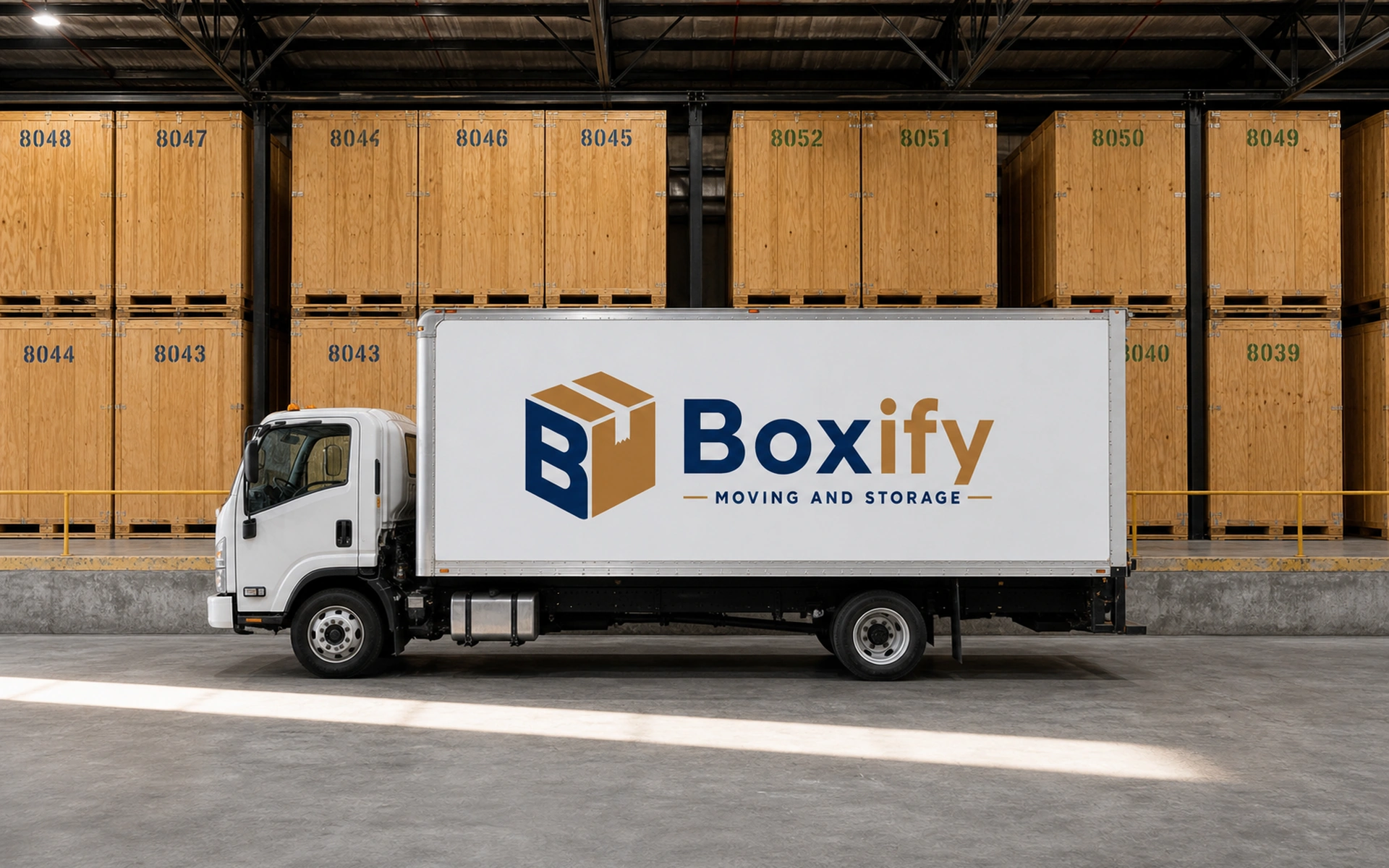
What Can (and Can't) Go Into Full-Service Storage? An NYC Item Guide
Under the sink: a can of paint and some cleaning spray. In the closet: Grandma's jewelry and a case of wine. You've all but decided on full-service storage, Boxify picks your things up, stores them, and brings them back, so there's no unit to visit, and now you just want two questions answered: am I allowed to store this, and what happens if something gets damaged?
This guide answers both, plainly. If you're still weighing whether the category fits, start with full-service storage explained.
What you can (and can't) put into full-service storage
You can't store a short, universal list of banned items: hazardous or flammable materials, perishables and food, plants and animals, wet or strong-smelling things, cash and valuables, firearms and ammunition, illegal goods, and toxic or biohazard waste. Almost everything else in a home is fine.
That includes the climate-sensitive things New Yorkers worry about: wood furniture, electronics, leather, art, and documents are the items storage experts commonly flag as vulnerable to temperature and humidity swings. Those store just fine here, because Boxify's storage is climate-controlled, kept in a temperature- and humidity-managed space.
And if you're wondering what happens when something's damaged or lost: that comes down to insurance, usually your own home or renters policy. We cover the honest details further down.
Key takeaways
- The banned list is short. Hazardous or flammable materials, perishables, plants and animals, wet or strong-smelling things, cash and valuables, firearms and ammunition, illegal goods and toxic waste.
- The flammables rule is the Fire Code, not a house policy. NYC's Fire Code governs how flammable and combustible liquids may be stored, and the FDNY enforces it.
- Almost everything else in a home is fine. The ordinary contents of an apartment store without difficulty.
- Climate-sensitive things store well here. Wood, leather, electronics, art, photos and documents are the items commonly flagged as vulnerable, and our space is temperature and humidity managed.
- Coverage usually comes from your own policy. A home or renters policy typically extends to storage only up to a sublimit, about 10% of contents cover or $1,000, whichever is greater.
- Check how yours pays out. A New York policy pays actual cash value by default, which is replacement cost minus depreciation, unless replacement-cost cover was bought.
- Above the sublimit, insure separately. Separate storage-goods insurance can be bought from an independent insurer if your stored things are worth more than the policy allows.
What you can't store: the prohibited list
Every storage facility bans the same short list of items, and the reasons are about safety and law, not fine print. Each item below comes from that universal prohibited set:
- Hazardous, flammable, or explosive materials: gas, propane, fireworks, aerosols, and pool chemicals, banned for fire safety.
- Perishables and food: they rot, smell, and draw pests that put everything nearby at risk.
- Plants, animals, and other living things: a storage space can't keep them alive.
- Wet or strong-smelling items: trapped moisture breeds mold, and odors spread.
- Cash, valuables, and irreplaceables: these belong with you, not in storage.
- Firearms and ammunition: restricted for legal and safety reasons.
- Illegal or stolen goods, including marijuana: never permitted.
- Toxic, biohazard, or medical waste: a health hazard with no place in shared storage.
The flammables ban isn't red tape. In New York City, the storage of flammable and combustible liquids is governed by the NYC Fire Code (2022, Chapter 57), enforced by the FDNY. The code states Chapter 57's scope plainly: it governs the "storage, handling and use of flammable and combustible liquids". That's the local reason a can of gas or a propane tank can't come with your couch, a detail most national "what not to store" lists miss.
What you can store, including climate-sensitive items
Almost everything else in a typical home stores just fine, including the delicate things a small NYC apartment tends to worry about. The everyday overflow is the easy part: furniture, mattresses, seasonal gear, books, and décor all store without a second thought.
The bigger worry is usually humidity. Storage experts flag a familiar set of things as climate-sensitive: wood furniture, leather, electronics, art, photos, documents, and instruments, because swings in temperature and humidity are what warp, crack, and grow mold on them. Boxify's storage is climate-controlled, a temperature- and humidity-managed environment, so those items are kept steady rather than left in a damp basement or a baking attic.
One call worth making before pickup, drawn from years of writing about how small-apartment New Yorkers actually store their things: the items people later regret aren't the banned ones (those are obvious) but the allowed, everyday things that went in unprepared. A leather bag boxed while damp; books packed off a humid shelf. Climate control steadies the room, but you still control the item: give anything cloth, leather, or paper a moment to dry before it's boxed.
Curious how the handoff actually works? See how the pickup process works. And when you're ready to clear the space, you can book a storage pickup. Boxify comes to you.
What if something's damaged or lost? Your coverage, honestly
If something in storage is damaged or lost, what you can recover almost always comes down to insurance, and for most people that means their own home or renters policy, not the storage company. A lot of storage guides skip this question or wave it away with a breezy "don't worry, you're covered." The honest version is more useful, because it's better to know before you book than after something happens.
Here's how coverage for stored goods generally works:
- Your home or renters policy usually reaches into storage, but only so far. Most policies extend to belongings kept off-site up to a sublimit: about 10% of your contents coverage, or $1,000, whichever is greater. So a policy with $50,000 in contents coverage protects roughly $5,000 of stored goods.
- New York pays "actual cash value" by default. Unless you've bought replacement-cost coverage, a New York home or renters claim pays actual cash value (replacement cost minus depreciation), so a claim on older stored items can pay far less than it costs to replace them.
- You can buy more if you need it. If your stored things are worth more than your policy's storage sublimit, you can buy separate storage-goods insurance from an independent insurer.
The single most useful step is the simplest: check your own home or renters policy first, so you know exactly what's covered, and for how much, before you book. If it isn't enough, you'll know to top it up.
Store it or keep it? Valuables and irreplaceables
A few things are better kept with you than stored at all: cash, jewelry, passports, and anything irreplaceable or sentimental. They sit on the universal do-not-store list for a plain reason: no storage arrangement can replace a one-of-a-kind item, and the truly valuable things are easiest to keep close.
It's less a hard rule than an honest one: store the couch, the winter coats, and the boxes of books; keep the engagement ring, the passport, and the family photos that can't be re-bought in a drawer at home.
FAQ
What items are not allowed in storage?
Storage facilities universally ban hazardous, flammable, or explosive materials (gas, propane, fireworks, aerosols, pool chemicals), perishables and food, plants and animals, wet or strong-smelling items, cash and valuables, firearms and ammunition, illegal or stolen goods, and toxic or biohazard waste. Most of the list is about fire safety, health, and law.
Can I store furniture and a mattress?
Yes. Furniture, mattresses, seasonal gear, books, and décor are all fine to store. Storage experts flag mattresses and upholstery as among the most moisture- and mold-prone things you can store. Boxify's storage is climate-controlled (kept in a temperature- and humidity-managed space), so those pieces are far less exposed to the damp that causes mold.
Can I store electronics or wood furniture in NYC humidity?
Yes. Electronics and wood furniture are exactly the kind of items storage experts flag as climate-sensitive: the things temperature and humidity swings are most likely to warp or damage. Boxify's storage is climate-controlled, so temperature and humidity are kept steady rather than swinging the way a basement or attic does.
Is my stuff insured in storage?
Coverage for stored goods generally comes from your own home or renters policy, and only up to a sublimit: about 10% of your contents coverage, or $1,000, whichever is greater. By default a New York policy pays actual cash value, which is replacement cost minus depreciation, unless you buy replacement-cost coverage. If that isn't enough, you can buy separate storage-goods insurance. The best first step is to check your own policy.
Why can't you store flammable items?
Flammable and combustible liquids are a fire risk, and in New York City their storage is governed by the NYC Fire Code (2022, Chapter 57), enforced by the FDNY. That's why gas, propane, aerosols, and similar items are on every facility's banned list.
Can I store valuables or jewelry?
It's better to keep them with you. Cash, jewelry, passports, and irreplaceable or sentimental items are on the universal do-not-store list, because nothing can replace a one-of-a-kind item if it's lost. Store the everyday things and keep the truly valuable ones close.
Know the list, and check your coverage first
Full-service storage takes almost everything a NYC apartment can throw at it: furniture, seasonal gear, and the things storage experts flag as climate-sensitive, like wood, leather, and electronics. Those keep steady because Boxify's storage is climate-controlled. The short list it won't take is the universal one: hazardous materials, perishables, living things, wet or smelly items, valuables, firearms, illegal goods, and toxic waste. And if something is ever damaged or lost, the coverage that matters is usually your own policy, so check it before you book. Know those three things, and there are no surprises after pickup.
Ready to get it out of the way?
Now that you know what stores and what doesn't, the next step is the easy one: get a free, upfront quote, and Boxify comes to you: no unit to visit, no hidden fees, and the price we quote is the price you pay.
Get a free, upfront storage-pickup quote



- Full-service storage explained: what full-service (valet) storage is, and how it differs from a self-storage unit.
- Book a storage pickup: the free-quote-to-pickup steps, in Boxify's no-surprises voice.
- How the pickup process works: the pickup-to-redelivery cycle, step by step.
The prohibited-items, fire-code, and insurance facts below are general public information, cited to their sources; Boxify's climate-controlled storage is its own stated practice.
- NYC Fire Code (2022), Chapter 57 / FDNY: governs the storage of flammable and combustible liquids in New York City; Chapter 57 covers the "storage, handling and use of flammable and combustible liquids," which is the reason facilities ban flammables.
- NYS Department of Financial Services: a New York home or renters policy pays claims at actual cash value (replacement cost minus depreciation) by default, unless replacement-cost coverage is purchased.
- Major insurers (Nationwide, Progressive): a homeowners or renters policy usually extends to storage only up to a sublimit (about 10% of contents coverage, or $1,000, whichever is greater); separate storage-goods insurance can be bought if that limit isn't enough.
- Fire codes and major storage operators: the universal set of items storage facilities prohibit.
- General storage-industry guidance: the items commonly flagged as climate-sensitive (wood, leather, electronics, art, photos, documents, instruments).
Fire-code and insurance rules reflect the NYC Fire Code (2022), NYS DFS, and major-insurer guidance current as of 2026; we re-confirm these citations at publish and refresh this guide when the rules change.
Rita Penn, Author. Rita Penn is a copywriter with over eight years of experience writing for home service businesses and service providers. She specializes in the moving and storage industry and has created content for several moving companies, along with businesses across other service-based industries.
Eddie Torr, Editor. Eddie Torr is an AI content editor: the independent quality-and-compliance gate every draft passes before it advances. He checks each claim against its approved source, tests the piece against the editorial standards, ranks it, and returns a verdict. He never rewrites the piece himself and never approves delivery; a human reviewer does that.
Maya Ellison, Reviewer. Maya Ellison is an editorial lead with more than 11 years across copywriting, editing, content strategy, and editorial operations. She holds a bachelor's in Communications (Professional Writing and Digital Media) and a master's in Information and Knowledge Management. Those are the two sides of her work: creating clear content, and building the systems that produce it consistently. She gives every piece a final human review before it ships, confirming each claim is fairly represented, tied to a checked source, and dated.
Reviewed on this post: Maya confirmed the prohibited-items list and the flammables ban are cited to the NYC Fire Code and major operators as general rules. She also confirmed the damage-and-loss section describes home-policy sublimits, actual-cash-value payouts, and separate storage-goods insurance strictly as general, attributed insurance reality (with the reader told to check their own policy) and that the page makes no claim about Boxify's own coverage or liability.