
No Room in Your NYC Apartment? What to Store (and What to Keep) When Space Runs Out
Your closets are full. There's a chair no one sits in, a box you step around every morning, and a dining set from your last apartment that never quite fit this one. You don't want to throw any of it out (some of it you actually use, and some of it you can't part with), but there's simply nowhere left to put it.
If that's your apartment right now, you have more options than a donation pile. The calm move is to decide, room by room, what's worth keeping close, what's worth storing (the bulky furniture included), and what's genuinely ready to go. And storing the overflow doesn't have to mean renting a truck and hauling boxes across the borough. That's what full-service storage is built for: the company comes to you, picks it up, and keeps it until you want it back.
This guide walks you through that decision the way we'd talk it through with a neighbor: no weekend of lifting, no unit to visit, just a clear way to get your space back.
What to store when your apartment runs out of room
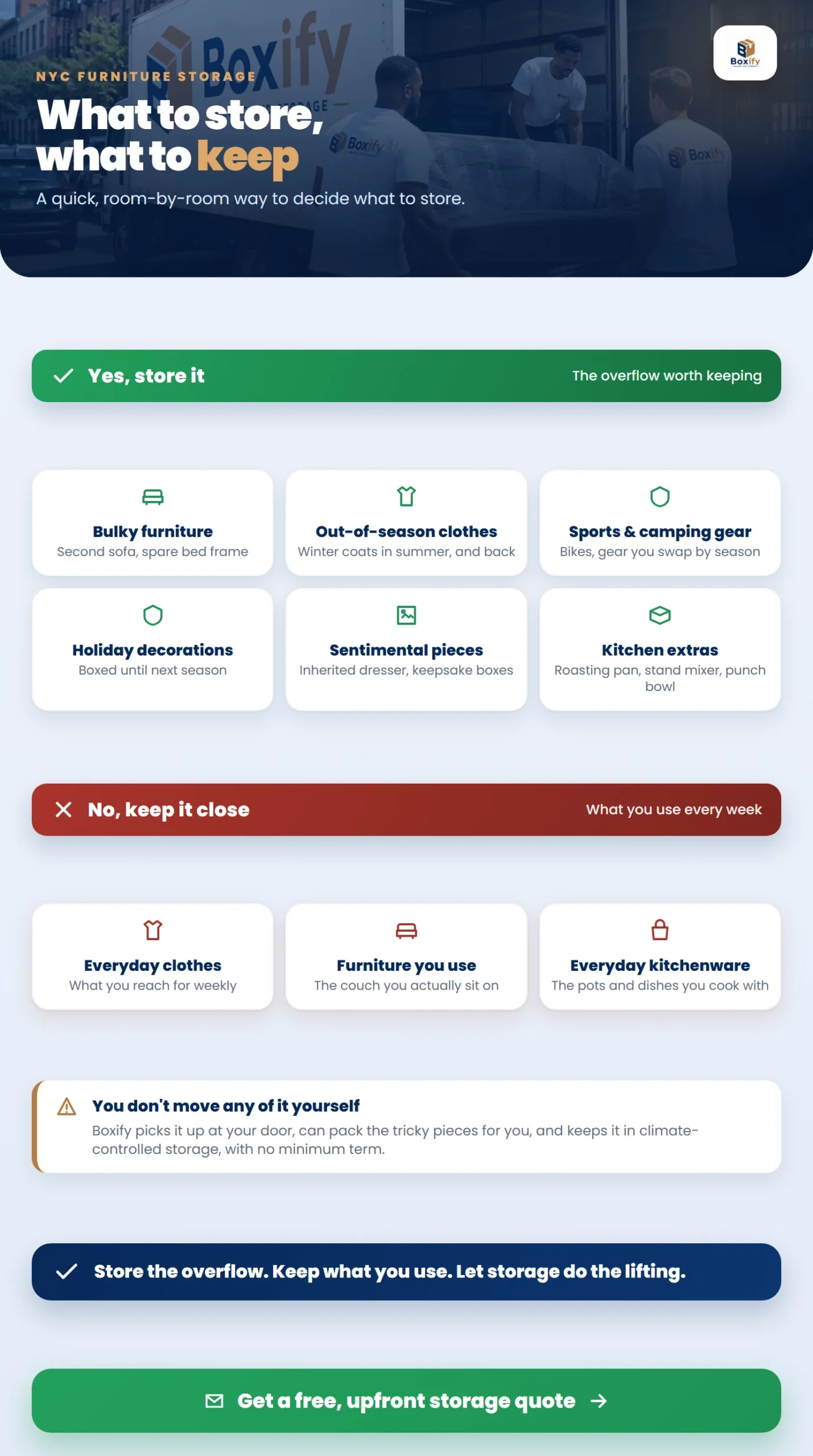
When your NYC apartment runs out of room, keep what you use every week, store what you use seasonally or rarely but can't part with, and let go of what you haven't touched in a year and don't love.
The things earning their place stay: your everyday clothes, the couch you actually sit on, the pots you cook with. The overflow goes into storage: out-of-season clothes, holiday and sports gear, bulky furniture you're not using, and the sentimental pieces you can't fit but can't lose. Whatever you haven't used in a year and wouldn't miss can finally move on.
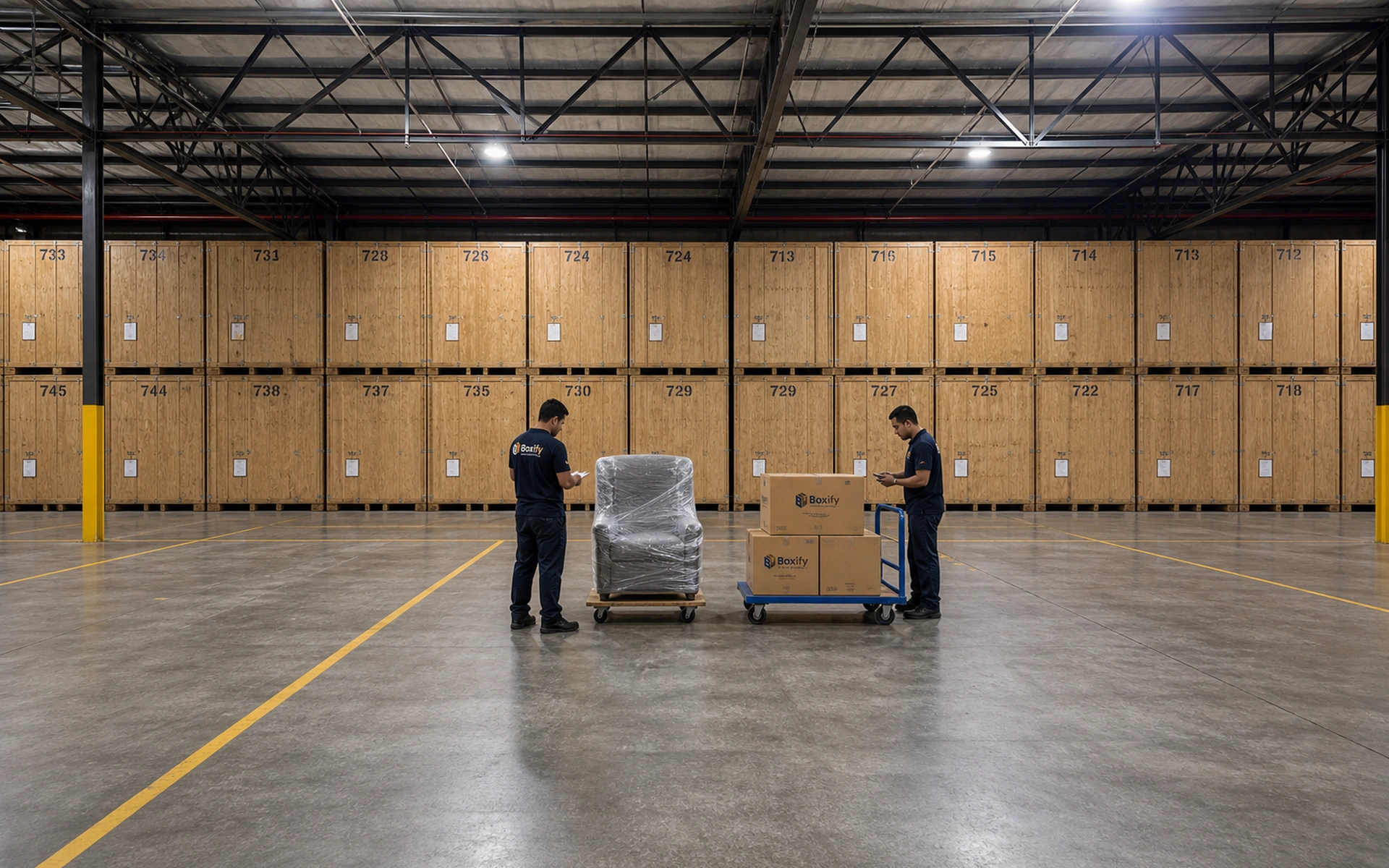
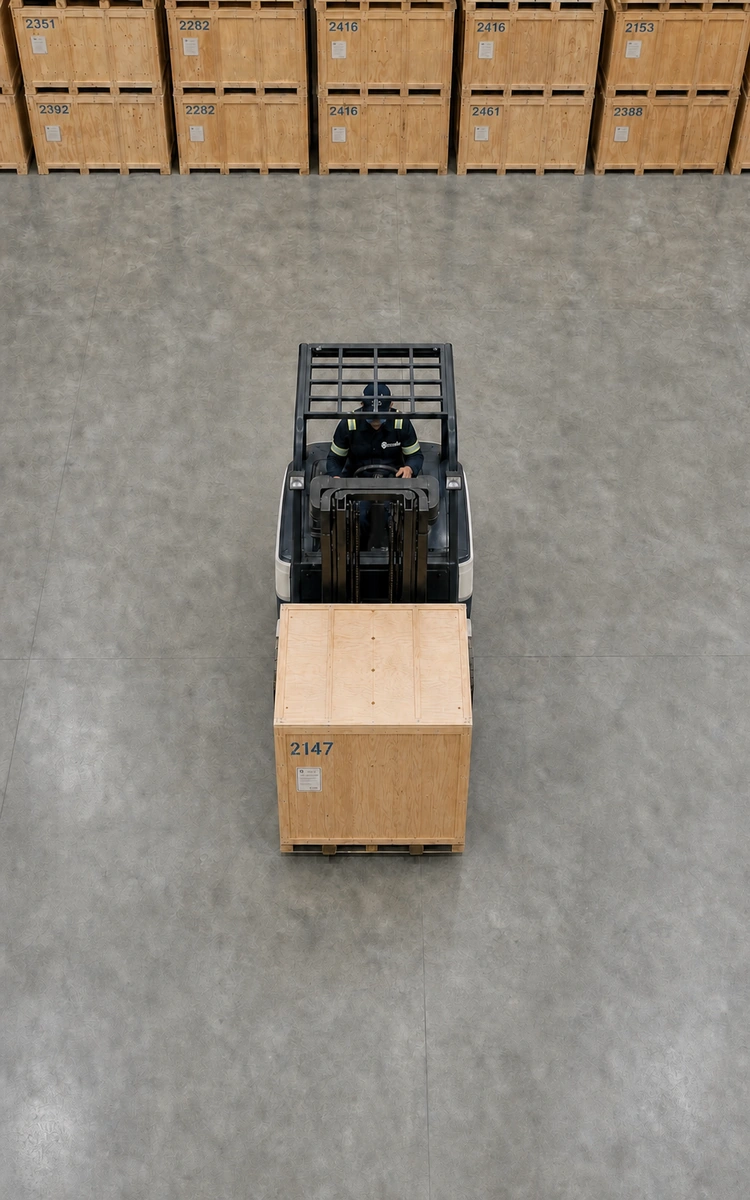
Storing the overflow is the low-effort part: with full-service (valet) storage, you don't haul any of it. The company picks it up at your door, keeps it, and brings it back when you want it, so furniture storage in NYC no longer means renting a truck and driving to a unit across town.
Key takeaways
- The decision rule: keep what you use weekly, store what you use seasonally or rarely but can't part with, and let go of what you haven't touched in a year and don't love.
- The usual overflow: out-of-season clothes, holiday and sports gear, bulky furniture, and sentimental pieces are what fill a NYC apartment first, and they're exactly what storage is for.
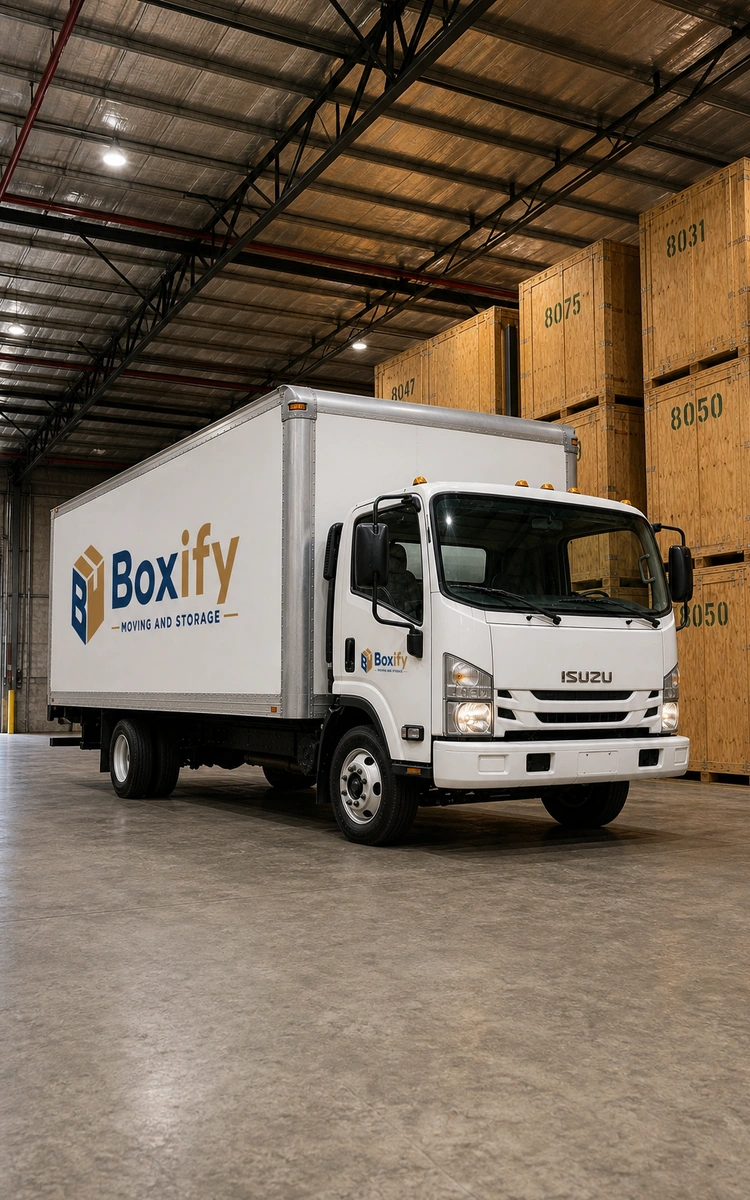
- You don't haul it. Full-service (valet) storage comes to you: Boxify picks it up at your door, with no truck to rent and no unit to visit.
- The tricky pieces get packed for you if you want. Boxify can pack all or part of your things, including fragile and specialty items like art and antiques.
- It's kept in good conditions. Storage is climate-controlled, so seasonal and delicate items sit in a temperature- and humidity-managed space.
- There's no minimum term: store the overflow for a few months or a few years, whatever you need.
- You get it back fast. Stored items are usually redelivered within 24 to 48 hours of a request, subject to availability, so it's best to ask a little ahead.
What's in this guide
- How to decide what to store (and what to keep)
- Furniture storage in NYC: where the bulky pieces go
- Room by room: the usual overflow
- Seasonal and bulky items: the overflow that eats an apartment
- The low-effort part: storage that comes to you
How to decide what to store (and what to keep)
The simplest way to decide what to store is to sort every crowded item into three piles (keep, store, or let go) by how often you actually use it. Most decluttering advice stops at "toss it or donate it," but plenty of what crowds a NYC apartment is worth keeping. It just doesn't need to live in your 600 square feet right now.
Here's the rule, pile by pile:
- Keep what you reach for weekly: everyday clothes, the dishes you cook with, the furniture you actually use. If it earns its footprint, it stays.
- Store what you use seasonally or rarely but can't (or don't want to) part with: winter coats in summer, the guest air mattress, the dining set that doesn't fit this apartment, the pieces you inherited. Out of the way, not out of your life.
- Let go of what you haven't touched in a year and wouldn't buy again. If you won't miss it, it doesn't need a spot in your closet or a box in storage.
Here's a pattern worth naming, drawn from years of writing about how small-apartment New Yorkers actually pare down: the pieces that stall a decision are rarely the obvious ones. The couch and the dining set get sorted fast: they're big, and you can see the space they'd free. It's the mid-size "someday" things that trip people up: the second bookshelf, the folding table, the extra dining chairs, the exercise bike draped in laundry. Each feels too useful to let go and too in-the-way to keep.
The hard pile is the middle one: the "maybe" you can't quite decide on. A good tie-breaker: if it's genuinely useful or genuinely meaningful, store it; if it's neither, let it go. Storing it is an easy call to make when you know it won't cost you a weekend of hauling, which is where the next few sections come in.
Furniture storage in NYC: where the bulky pieces go
When a couch, a dining set, or an inherited dresser won't fit but you're not ready to part with it, furniture storage is where it goes, and with full-service storage in NYC, you don't move it there yourself. This is the overflow that hurts most in a small apartment, because a single piece can eat a whole corner.
The usual suspects are the big ones: the second sofa from a merged household, the dining table that seated your old place but crowds this one, the spare mattress and bed frame between roommates, the armoire or dresser you inherited and can't imagine giving away. None of it has to sit in your living room to stay yours.
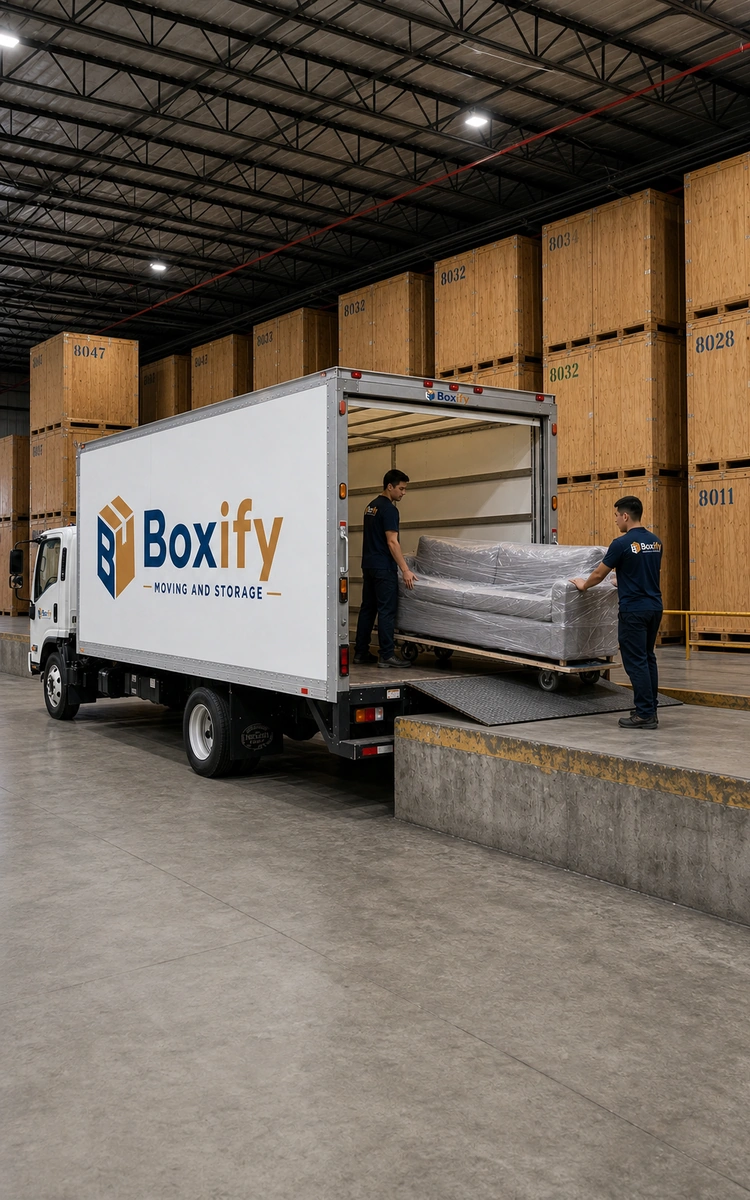
With Boxify's valet storage, the pieces are picked up at your apartment and stored for you: no truck to rent, no dolly to wrestle down four flights, no unit to drive to. You decide what to store; the lifting isn't your problem.
Room by room: the usual overflow
In most NYC apartments, the overflow collects in the same predictable places, so a quick walk room by room usually surfaces everything worth storing in about ten minutes. Here's where it tends to hide:
- Bedroom: out-of-season clothes, the spare comforter set, the suitcase you use twice a year.
- Living room: the armchair no one sits in, a second sofa, the side tables you swap by season.
- Kitchen: the appliances that come out twice a year: the big roasting pan, the stand mixer, the punch bowl.
- Entry and closets: luggage, sports and camping gear, bikes, holiday decorations, and the fan and space heater taking turns.
- The pieces you can't part with: an inherited dresser, a hope chest, boxes of photos and keepsakes that matter but have nowhere to sit.
Walk it once with the keep-store-let-go rule in mind, and a cramped apartment usually gives up more space than you'd expect, without a single thing you care about ending up on the curb.
Seasonal and bulky items: the overflow that eats an apartment
Seasonal and bulky items are the biggest space-eaters in a small apartment, because they're useless half the year but too valuable to toss: the window AC in January, the winter coats in July, the bikes nobody rides in the snow. They're the clearest "store it" candidates you have.
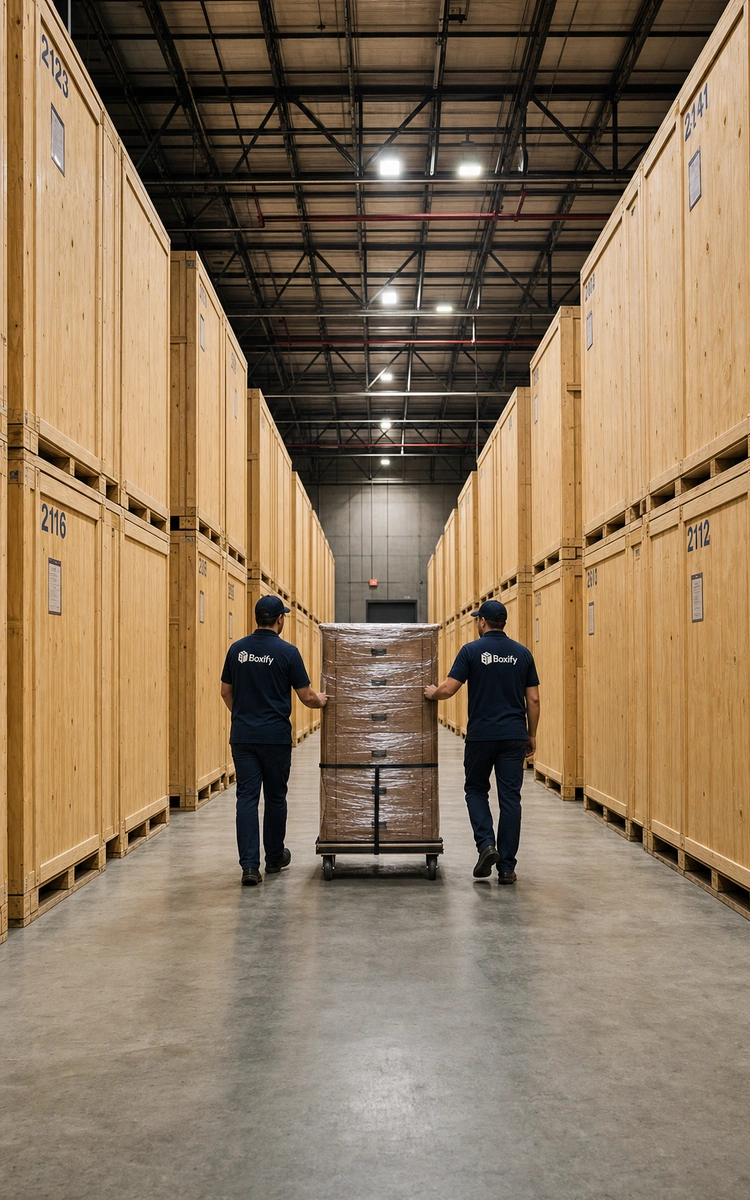
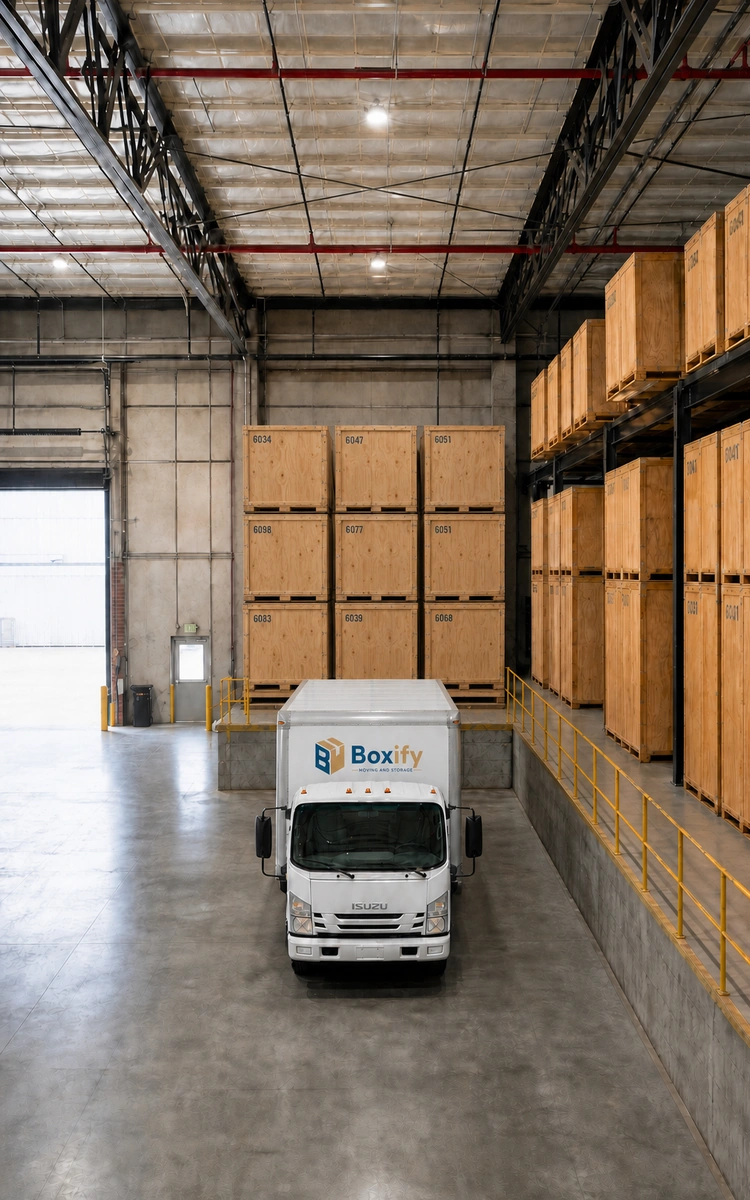
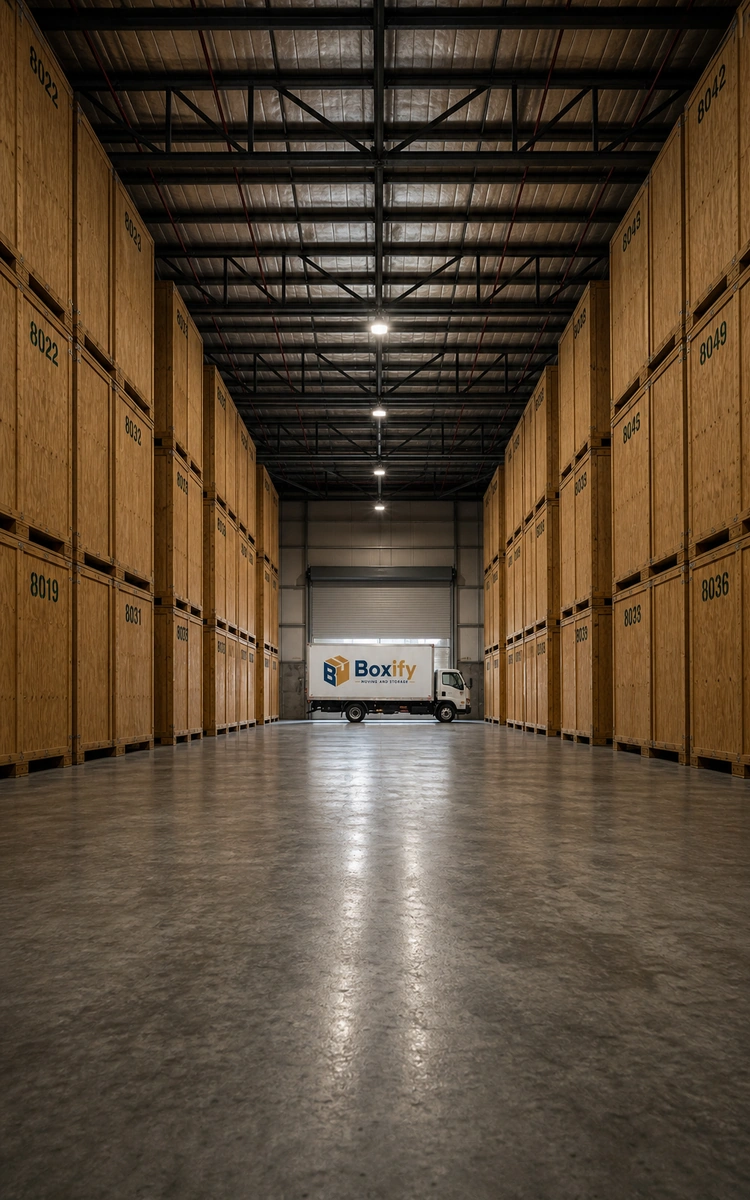
Sitting in storage for months doesn't have to mean coming back musty or warped. Boxify's storage is climate-controlled, kept in a temperature- and humidity-managed space, so wood, leather, electronics, and fabric handle a long stay far better than they would in a damp basement or a baking attic.
And because there's no minimum storage term, seasonal things can stay exactly as long as you need. Put the AC away for the winter and get it back in June, or keep a piece stored for a couple of years while life sorts itself out. Either way works.
If your reason for storing is a timing gap rather than everyday overflow (your lease is up before the new place is ready), that's its own situation. Here's short-term storage between leases for that reader.
The low-effort part: storage that comes to you
Here's what actually happens when you decide to store the overflow with Boxify: the storage comes to you, start to finish. When a customer books a storage pickup, the cycle looks like this:
- We come to your apartment. Boxify's crew arrives at your door and carries the pieces out: the couch, the boxes, the dresser. There's no truck to rent, no unit to drive to, and no hauling things down the stairs yourself.
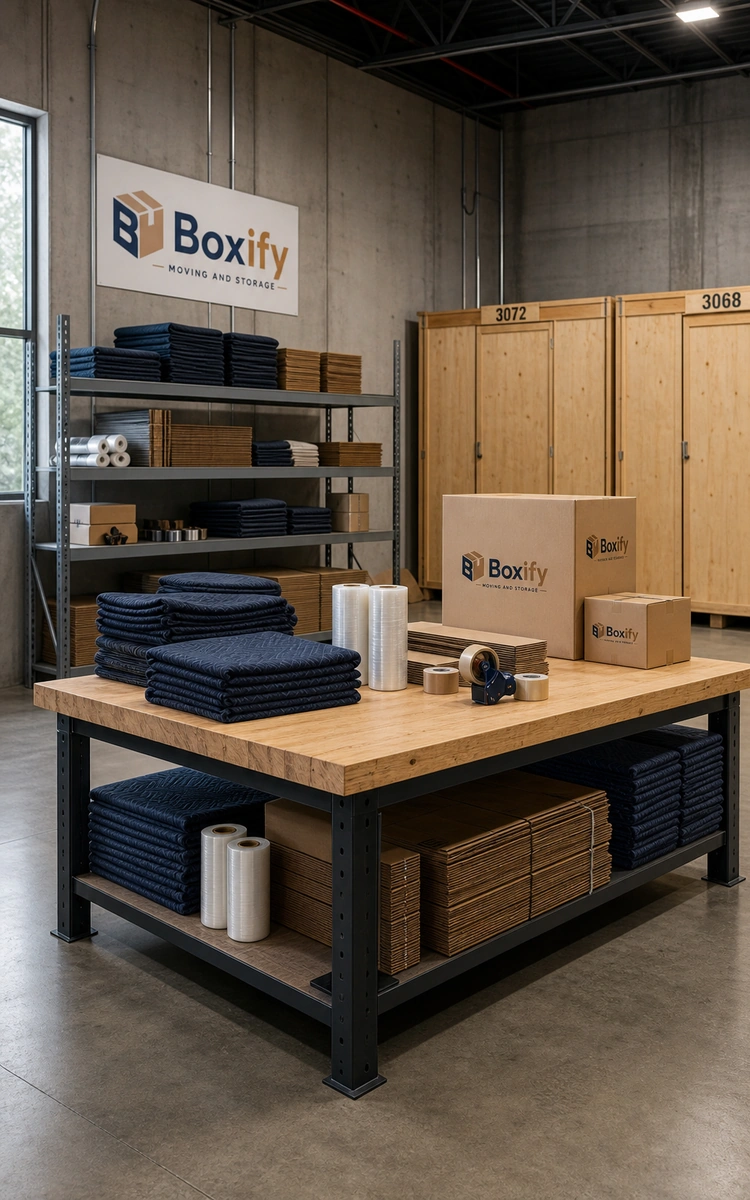
- We can pack the tricky pieces for you. You don't have to wrap the mirror or crate the artwork. Boxify can pack all or part of your things, including fragile and specialty items like art and antiques. Packing for storage isn't the same as packing for a move, so if you'd rather do it yourself, here's how to pack for storage.
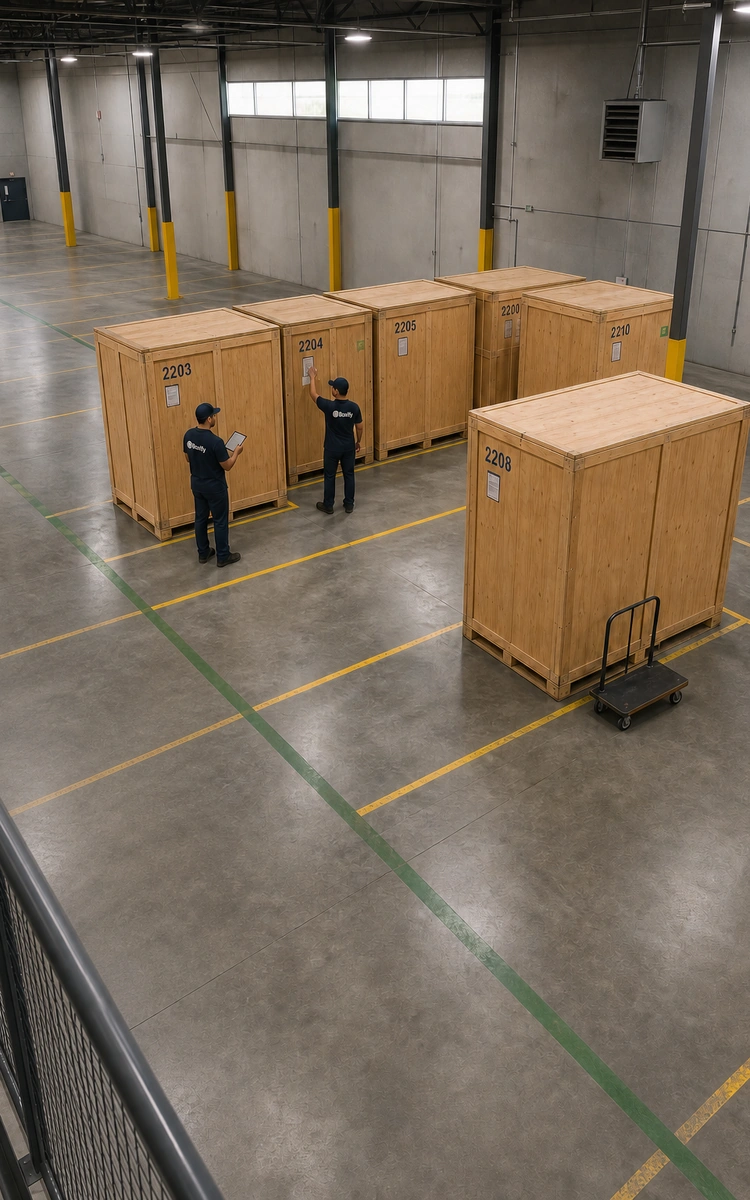
- It's kept in a climate-controlled space. Everything goes into temperature- and humidity-managed storage, so it stays in the shape you left it in.
- It stays as long as you need. No minimum term, so a few months or a few years is fine: you're not paying for time you won't use.
- It comes back to your door. When you're ready for your things, you request redelivery and Boxify brings them back. Stored items are usually returned within 24 to 48 hours of a request, subject to availability, so it's best to ask a little ahead rather than expect same-day.
That's the whole point of valet storage: clearing the overflow costs you a phone call, not a weekend. If you decide to go that route, Boxify's storage pickup comes to you, and you can get a free, upfront quote first, with no hidden fees.
FAQ
What should I store versus keep when my apartment is full?
Keep what you use every week, store what you use seasonally or rarely but can't part with, and let go of what you haven't touched in a year and don't love. Everyday clothes and the couch you actually sit on stay; out-of-season gear, bulky furniture, and sentimental pieces are what storage is for.
Where do I put furniture that doesn't fit?
Furniture that won't fit but you don't want to lose goes into storage. With full-service (valet) storage, you don't move it yourself: Boxify picks the pieces up at your apartment, stores them, and brings them back when you want them, so there's no truck to rent and no unit to visit.
Do I have to haul my things to storage myself?
No. That's the difference with full-service storage: it comes to you. Boxify's crew arrives at your door, carries the items out, and takes them to storage for you: no rental truck, no driving across the borough, no hauling boxes down the stairs.
Will my things be safe sitting in storage for months?
Yes. Boxify's storage is climate-controlled, kept in a temperature- and humidity-managed space, which protects wood, leather, electronics, and fabric during a long stay. There's also no minimum term, so seasonal items can sit as long as you need without paying for time you won't use.
How do I get my things back?
When you're ready, you request redelivery and Boxify brings your things back to your door. Stored items are usually returned within 24 to 48 hours of a request, subject to availability, so it's best to ask a little ahead rather than expect same-day.
Decide first, then let storage do the lifting
Running out of room in a NYC apartment doesn't mean tossing what matters. Keep what you use, let go of what you don't, and store the in-between: the seasonal gear, the bulky furniture, the pieces you can't part with. And storing it can be the easy part, because full-service storage comes to you: it's picked up, kept in good conditions, and brought back when you want it. Your apartment gets its space back without a single weekend spent hauling boxes.
Ready to clear the overflow?
If you've decided what to store and want it gone without the heavy lifting, Boxify's valet storage comes to you: we pick it up, keep it climate-controlled, and bring it back when you need it, with a free, upfront quote and no hidden fees.
Get a free, upfront storage-pickup quote.

- What full-service storage is, the plain-English guide to how valet storage works: pickup, storage, and redelivery, with no unit to rent or visit.
- Short-term storage between leases, what to do when the gap is about timing, not overflow, and your new place isn't ready yet.
- How to pack for storage, packing for storage isn't packing for a move; protect the fragile, bulky pieces the right way (or let Boxify do it).
The service details in this guide (valet pickup and redelivery, packing, climate-controlled storage, and no-minimum-term flexibility) describe how Boxify operates. This is a practical decision guide, not a statistics piece, so it cites no outside market data.
Reflects Boxify's current storage practices as of July 2026; we refresh this guide if they change.
Rita Penn, Author. Rita Penn is a copywriter with over eight years of experience writing for home service businesses and service providers. She specializes in the moving and storage industry and has created content for several moving companies, along with businesses across other service-based industries.
Eddie Torr, Editor. Eddie Torr is an AI content editor: the independent quality-and-compliance gate every draft passes before it advances. He checks each claim against its approved source, tests the piece against the editorial standards, ranks it, and returns a verdict. He never rewrites the piece himself and never approves delivery; a human reviewer does that.
Maya Ellison, Reviewer. Maya Ellison is an editorial lead with more than 11 years across copywriting, editing, content strategy, and editorial operations. She holds a bachelor's in Communications (Professional Writing and Digital Media) and a master's in Information and Knowledge Management. Those are the two sides of her work: creating clear content, and building the systems that produce it consistently. She gives every piece a final human review before it ships, confirming each claim is fairly represented, tied to a checked source, and dated.
Reviewed on this post: She reviewed this guide against Boxify's approved service details, confirming that the storage practices described (valet pickup, packing, climate-controlled storage, no minimum term, and 24-to-48-hour redelivery) match what Boxify actually offers, and that no price, coverage, or tenure claim is stated that its sources don't support.